By: Jared Haines, ACE NY
In the windy waters off the coast of Long Island in the Atlantic Ocean, lies an opportunity that has already brought local communities significant economic development and is projected to bolster the growing economy of Long Island for generations to come.
In a new report from the Long Island Association (LIA), two offshore wind projects are estimated to generate more than $460 million in economic value for Long Island between 2022 and 2027, creating hundreds of jobs and supporting businesses across the region. From mechanics to engineers, truck drivers to electricians, and welders to operators, establishing a new workforce and union development has been a goal and early success of bringing offshore wind to New York.
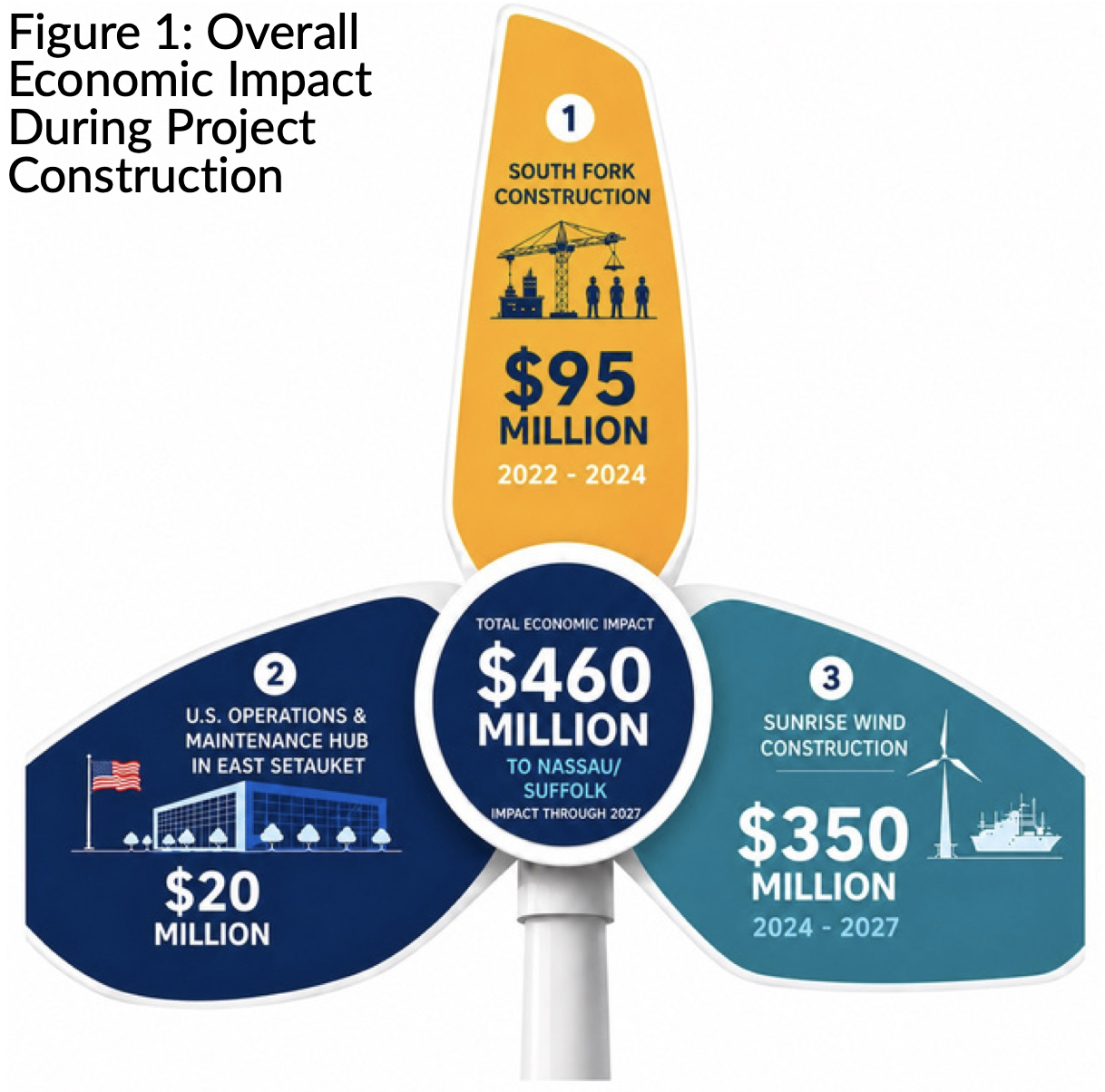
Source: Orsted Public Filings and IMPLAN Economic Model
South Fork Wind
South Fork Wind, the country’s first completed utility-scale offshore wind project, has exceeded expectations—both in generated energy and the economic benefits that it has provided local businesses on Long Island. Although portions of the construction process were performed in other areas, companies such as the Haugland Group, Roman Stone, A&S Rebar, Hawkeye Elecnor, and many others were directly contracted or subcontracted as integral pieces of the South Fork Wind supply chain. During the construction phase of this project which began in 2022, the developer of South Fork Wind, Orsted, pumped an estimated $55 million directly into Long Island businesses.
These were jobs performed by Long Island residents and business owners that received direct benefits of the project.
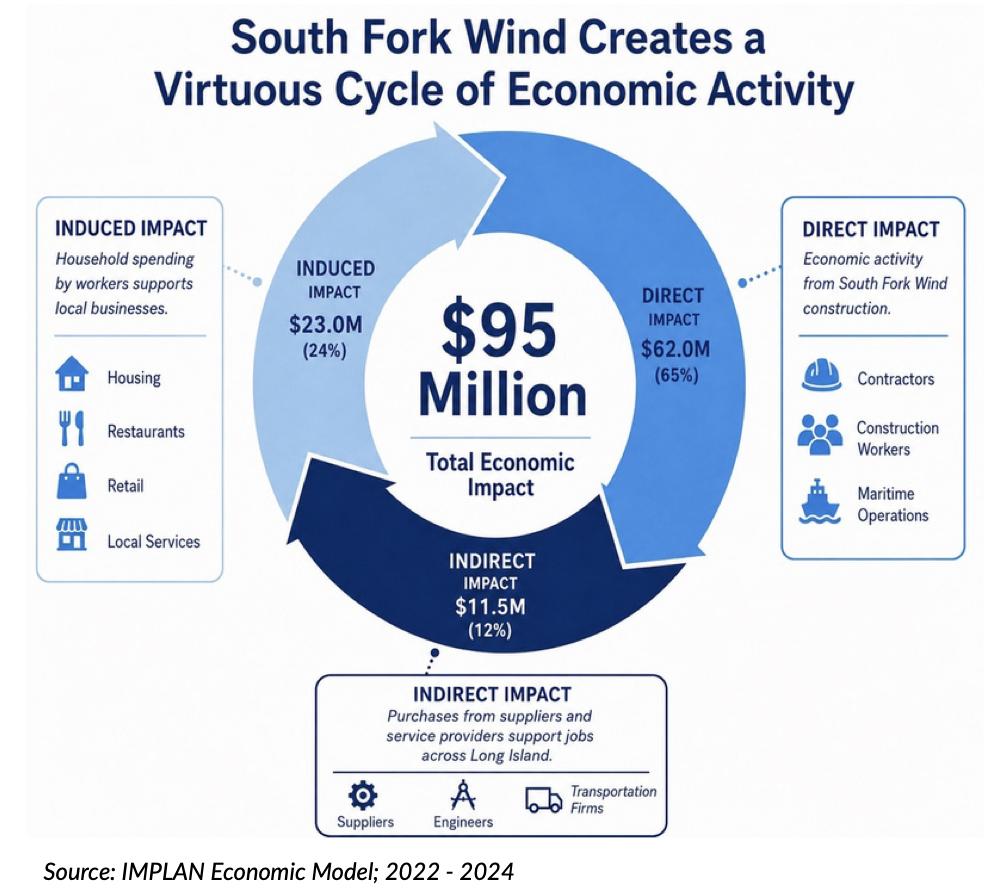
Using the IMPLAN economic model, the analysis estimates that South Fork Wind generated nearly $96 million in total economic activity, including direct spending, additional spending throughout the local supply chain, and spending by workers in the regional economy. The project supported an estimated 387 jobs and $40 million in labor income. The country’s first utility-scale offshore wind farm has been critical evidence of what this industry can bring to the table.
Sunrise Wind
Sunrise Wind, another permitted Orsted project off the coast of Long Island, is scheduled to be completed in 2027 and will provide enough electricity to power nearly 600,000 homes. Based on publicly available information and reported contracts, the LIA estimates that approximately $225 million in direct spending will benefit Long Island businesses.
Once that money enters the local economy, it continues to circulate. Contractors purchase materials and services from other businesses, while employees spend their wages at local stores, restaurants, and other businesses. The analysis estimates that these combined effects will result in more than $350 million in total economic value for Long Island, and approximately 400 jobs from Sunrise Wind.
Jobs
A concern regarding construction projects like those of offshore wind is that the jobs end when construction ends. Orsted has committed $10 million to the National Offshore Wind Training Center in Brentwood, where more than 1,100 workers had been trained as of June 2026, according to the Long Island Association's report.
Orsted's Operations and Maintenance Hub in East Setauket currently employs approximately 50 people, and the LIA estimates that the facility could grow to 110 employees by 2028. At that size, the hub is expected to generate roughly $20 million in recurring economic activity every year.
That's a very different economic proposition from a one-time construction project. Construction creates a burst of economic activity while a project is being built. A permanent operations hub can continue supporting workers, unions, businesses and communities for decades.
Additionally, many of the skills that are taught and developed when working in offshore wind are transferrable. Construction, electrical, engineering, maritime, and other technical skills can translate into careers across the broader energy and infrastructure sectors. For workers, that means an opportunity to build a career without necessarily having to leave the region to find it. For local businesses, it means developing a workforce that can help them take on more work as the industry grows.
That kind of investment matters because building out the offshore wind industry in Long Island brings education and training to the very people that keep the communities, the culture, and the history strong for the next generations.
Long-term Economic Impact
Not only does offshore wind bring workforce development as an important benefit, but there is also money going directly towards local infrastructure—$200 million in host community agreements with the Towns of East Hampton and Brookhaven over the next 25 years. Host community agreements guarantee direct investments towards the exact needs requested of the local communities. This may take the shape of improving a town park, a new fire truck, investments to the school system. In short, these agreements bring meaningful investments and improvements to the towns that host projects.
What It Means For Long Islanders
Putting large numbers into context may be difficult, but these numbers are represented in the real stories of Long Islanders.
It means a local contractor can have an opportunity to compete for work without moving their business somewhere else. It means a worker doesn't have to travel off Long Island to find the next opportunity. They can build a career, buy a home, and raise a family in the same community where they grew up. It means a young person growing up on Long Island can look at an offshore wind project and see more than turbines producing clean and reliable energy. They can see a potential career in construction, electrical work, engineering, operations, maintenance, or one of the many businesses that support the industry. And most importantly, a reason to stay a Long Island resident.
That's the part of the offshore wind conversation that can get lost when the focus is only on the projects themselves. The economic impact isn't limited to the companies building turbines or the workers installing infrastructure at sea. It reaches the local businesses supplying those projects, the delis and stores where workers spend their time and paychecks, the union members enhancing their skills, and the communities receiving long-term investments.
If Long Island continues investing in its workforce and developing a local supply chain, today's offshore wind projects can help create the foundation for an industry that lasts well beyond their construction timelines. The turbines may generate electricity for decades, but the skills that are developed, the businesses that grow, and the economic relationships created along the way will last just as long.